A certificate records the aerodrome as it was on the day it was inspected. Then a taxiway is widened, a mast goes up, a manual is revised and the AIP entry is not. Forty years
of aerodrome standards — from a beach landing strip in the Hebrides to Changi and
Manila — applied to the question your certificate doesn't answer:
does the aerodrome on the ground still match the one in the manual?
RUNWAY EDGE AND THRESHOLD LIGHTING AT SUNSET, LARNACA, CYPRUS (LCA / LCLK) · PHOTOGRAPH: PETER KESTERTON
Who this is for
CAA aerodrome standards departments facing a USOAP audit.
Airport operators heading into certification or re-certification.
Inspectors who need to defend a compliance decision — not just quote the paragraph it came from.
Inspectors, aerodrome staff and safety officers who need to understand the detail.
1982
First runway inspection
2013–2018
ICAO expert missions
15
Civil aviation authorities advised
4
Continents delivered in
Barra's beach to Singapore's Changi
The operational range
Where this usually starts
Three challenges, always the same three.
Oversight
“Our USOAP audit is in nine months.”
AGA protocol questions with no evidence behind them, inspectors who've never
run a certification audit end-to-end, and an Effective Implementation score
nobody wants to publish.
Operator
“Our aerodrome manual doesn't match our aerodrome.”
The declared distances, the obstacle data and the AIP entry disagree with each other
— and the certificate renewal is on the desk.
Inspectorate
“We know the paragraph. We can't defend the decision.”
Annex 14 sets the standards and recommended practices for your State to create the
aerodrome regulations that you must follow. Neither tells you the detail that applies
to your operation. That judgement is the whole job — and it's rarely taught.
The compliance calendar CHECKING
What's already late, and what's next.
Applicability dates move slowly and then arrive all at once. These are the ones
currently biting aerodrome operators in Europe, the Gulf and Asia-Pacific.
—
EASA Part-IS applies to aerodrome operators
Commission Delegated Reg (EU) 2022/1645 · information security management · EU aerodrome operators and apron management service providers under Reg (EU) No 139/2014
Amendment 18 · OFS / OES / Aeroplane Design Group replace the legacy OLS geometry — the largest change to obstacle safeguarding EVER
Use it
Reproduce this table in your own briefing or training material, with
attribution and a link back. Subscribe it to your calendar as an .ics and you
will never need to check the page again. Want a co-branded version for your authority or
airport group? Ask.
Kept current
Checking…
A maintained calendar is a commitment and a stale one
is worse than none — so this page checks its own age and says so, rather than presenting an
unverified date as fact.
NOTE — EASA'S OWN DESIGN RULEBOOK (CS-ADR-DSN ISSUE 7) STILL SITS ON ANNEX 14 AMENDMENT 15.
NPA 2026-01 PROPOSES TO CLOSE THAT GAP; IT IS NOT YET ADOPTED. DO NOT ASSUME ICAO AND EASA ARE SYNCHRONISED.
How it's taught
Standards you can see.
Four units, basic settings at 2°30′, 2°50′, 3°10′ and 3°30′, the highest nearest the runway. The pilots
read the PAPI on short final to maintain the stabilised approach and act on what they see. Drag the slider. Then find out
who at your aerodrome set those angles, when they were last verified, and against which
eye-to-wheel height. Then: for which range of aircraft, which aeroplane sits at the top of the on-course sector and which at the bottom, and do you have approaches that rely on an altimeter-derived glidepath in temperatures that induce an altimeter error — or are you harmonising the PAPI with an ILS glidepath?
1.8°2.5°3.0° NOMINAL3.5°4.2°
3.00°On slope
BASIC UNIT ELEVATION SETTINGS FOR A 3° SLOPE — A 2°30′ / B 2°50′ / C 3°10′ / D 3°30′.
THE UNIT NEAREST THE RUNWAY CARRIES THE HIGHEST SETTING, SO THE REDS SPREAD OUTWARD AS THE AIRCRAFT GOES LOW. THE 20′ ON-COURSE SECTOR IS TABULATED; MOST INSTALLATIONS USE 30′ FOR THE RANGE OF AEROPLANE SIZES AND HARMONISATION WITH THE ILS GLIDEPATH (ICAO ANNEX 14, VOL I, FIG. 5-20).
ANNEX 14 VOL I, §§5.3.5.24–5.3.5.41, FIG 5-19 & 5-20.
Programmes
Three ways in, depending on who's paying.
One paid diagnostic, then three ways to act on what it finds.
Start here · fixed fee
Aerodrome Certification Readiness Review
A desktop review, within four weeks. I take your aerodrome manual, your AIP entry, your declared distances,
your obstacle data and your last audit findings, and tell you where they disagree
with each other and with the standard. You get a written gap register with each item
rated, cited to paragraph, and assigned an owner — not a slide deck.
If it leads to further consultation, the fee comes off that engagement — it does not
credit against course fees. If it leads nowhere, you still own the register and can
work it yourself.
This works best if I give you the certification checklist, you complete and return
it, within 10 days, or whatever we agree, and I comment and analyse as above.
$4,500FIXED · PER AERODROME
Aerodrome manual vs. as-built reconciliation
Declared distances and AIP cross-check
Obstacle and safeguarding data currency
Structure aerodrome compliance
Gap register, cited and prioritised
One-hour findings Zoom call with your accountable manager
Runway condition assessment and reporting for non-snow runways — RWYCC, the runway
condition report, SNOWTAM, and what happens downstream. For aerodrome operators, ATC,
AIS, airline ops and pilots.
How PAPIs actually work, how the angles are set, and the relationships between
elevation settings, temperature, runway markings and different aircraft types.
Airfield lighting, marking, ground equipment and pavement suppliers put people in front of
aerodrome operators and inspectors who have never worked airside. Their customers speak in
Annex 14, and the conversation stalls at the first acronym. The same course inspectors use,
from the beginning: what the words mean exactly, what the operational requirement is, and
how the physical aerodrome is laid out — and why, not just that it is.
Start with the first four modules. If you go on to the full course, what you have already
paid comes off the price.
$450MODULES 0–3 · CREDITED AGAINST THE FULL COURSE
Module 0 — Introduction: let's get started
Module 1 — What do you mean, exactly? Getting the terminology right
Module 2 — Operational requirement
Module 3 — The physical aerodrome
Same lessons, same checklists, same certificate route as the full course
Which surfaces apply is derived from the operation you intend to run. State the operation,
derive the reference code, then select the surfaces. Get that order wrong and every obstacle
assessment downstream inherits the error.
Scroll to buildThe operational requirement comes first. Runway, strip, and the code they imply.
Fig. 4.1 — schematic, not to scale, vertical scale exaggerated ×16 · ICAO Annex 14 Vol I, Ch. 4, Table 4-1 col. 10 · precision approach CAT I, code 4 · this is ICAO, not EASA and not any State's transposed law · Amendment 18 replaces this framework with obstacle free and obstacle evaluation surfaces from 21 November 2030 · illustrative only, not for safeguarding
Evidence
Two national programmes, one measurable outcome.
Thailand
Civil Aviation Authority — CAAT
Aerodrome Standards Department
Getting the AGA score above target
Formal training in aerodrome standards and safety-oversight auditing, on-the-job
training for aerodrome inspectors, support in drafting aerodrome regulations, and
direct support to CAAT through ICAO USOAP activities.
Inspector training programme, classroom and OJT
Aerodrome regulation drafting support
USOAP activity support
Outcome credited by a CAAT aerodrome inspector: AGA Effective Implementation score lifted above target
Building a certification capability, then handing it over
Consultant and expert on aerodrome certification: basic and advanced aerodrome
standards training, audit-skills workshops, LVP and PAPI harmonisation workshops,
and revisions to the national Manual of Standards for Aerodromes.
Basic and advanced aerodrome standards training
Audit-skills workshops for the inspectorate
LVP and PAPI harmonisation workshops
MOS for Aerodromes — revision support
Why this matters
The certified aerodrome problem
A certificate records a moment. Aerodromes change.
In March 2026 a national audit body reported that its transport ministry had approved
localizer and runway end safety area structures that did not meet the standard, at
several aerodromes, over a period exceeding twenty years — and that a design manual
on frangible structures had been withdrawn three years after it was introduced. Those
were certified international aerodromes, in a state with a strong safety oversight
score, that had never appeared on anyone's technical assistance list.
Certification status is not evidence of current physical conformance
Structure siting and frangibility degrade quietly, across decades, without a triggering event
A high Effective Implementation score measures the regulator, not the pavement
Effective Implementation measures a State's oversight system — it is not a measurement of physical conformity at any one aerodrome
In the aerodrome domain ICAO does not inspect aerodromes — the audit team makes industry visits to verify what it found in the CAA's records and evidence
Also on file
References, in their own words
Written references held from two South-East Asian civil aviation authorities,
Punta Cana International Airport, an EU–South Asia aviation event and a UK
regional airport — published here with each individual’s permission, wording as written.
15 civil aviation authorities across four continents, plus EASA work and UK regional airport
operations.
“Peter provided basic and advance aerodrome standards training course, aerodrome audit and certification workshop, gave recommendations on many issues related to aerodrome standards including ICAO Coordinated Validation Mission (ICVM) preparation. Finally, Thailand's AGA Effective Implementation (EI) score increased that made the total EI above target.”
“Peter work with us in CAA Philippines as a consultant and expert in Aerodrome Certification. He provided us basic and advance aerodrome standards trainings, audit skills workshop, LVP and PAPI harmonization workshops and many more.”
“I highly recommend Peter to be used by ICAO as an international instructor or spokesman for aerodrome technical instruction. He is superb in his familiar understanding of airport technology, engineering, and safety.”
“I am writing to express my heartfelt gratitude for your outstanding lecture on the comparison between EASA and ICAO aerodrome safety procedures during the recent event. Your presentation was not only highly informative but also delivered in a clear, engaging, and efficient manner. The depth of your knowledge and your ability to simplify complex topics for diverse audiences were truly impressive. It provided us with a deeper understanding of the similarities, differences, and best practices in safety procedures, which will undoubtedly be beneficial in our respective fields. Thank you for dedicating your time and effort to sharing your expertise. Your contributions greatly enriched the event and left a lasting impact on all attendees.”
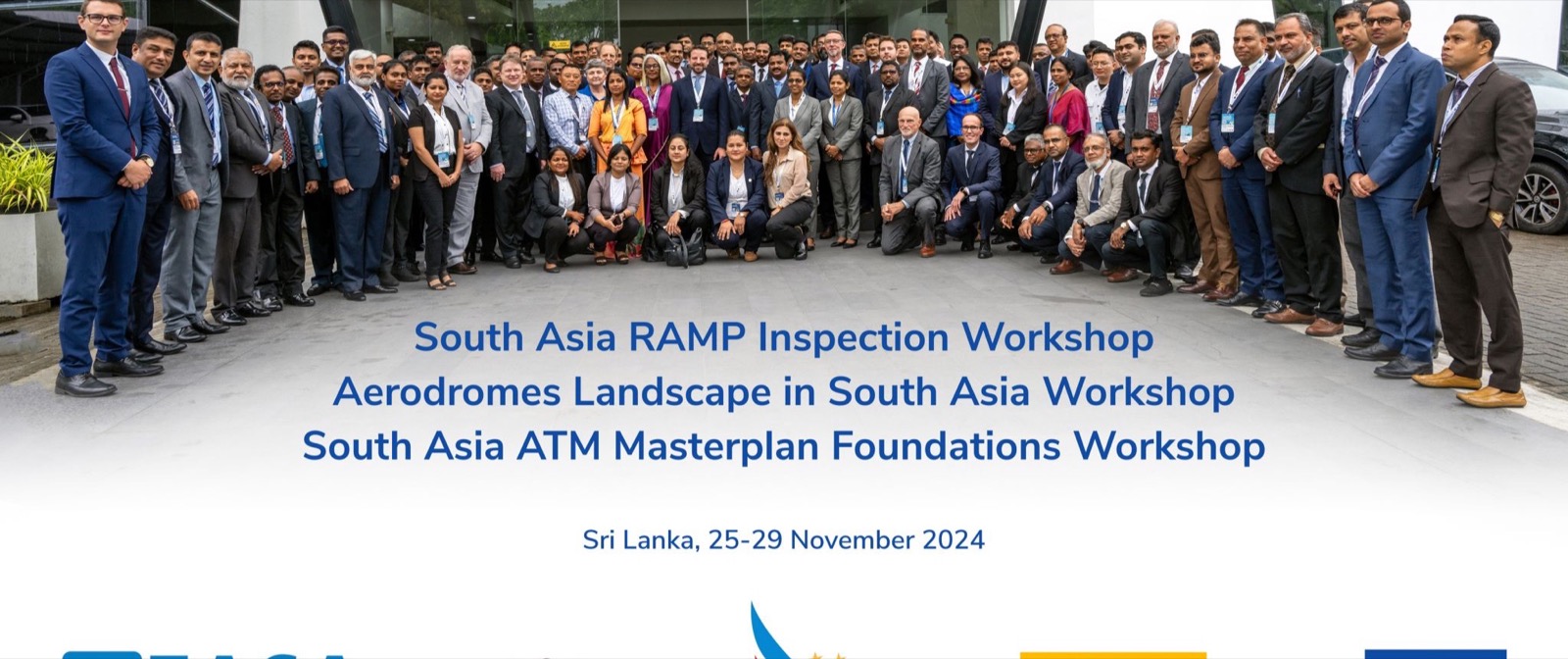
EU–South Asia Aviation Partnership workshops, Civil Aviation Authority of Sri Lanka, 25–29 November 2024 · photograph supplied by Peter Kesterton
“That regional airport story sounds very familiar! As much as those changes were questioned by many of the ‘we’ve always done it like this brigade back in 99’ it’s fair to say Peter you had the single biggest impact in shifting the safety culture at an airport I’ve seen either before or since.”
Findings THE WRITING
Where the standard meets the asphalt.
Not thought leadership. One question, one standard, one verdict — usually prompted by
a photograph of something built wrong.
Peter’s findings — the short standards-vs-asphalt pieces — are published on LinkedIn while this site’s versions are being reviewed.
Free tools SIX CALCULATORS
Every figure cited to the paragraph it comes from, and every row marked Standard or
Recommendation — because the same number can be either, depending on which instrument binds you.
Legal entityPK Safety and Training Services Ltd — registered in Scotland, SC159850, incorporated 1995. Sole director.
SpecialismAerodrome safety and certification — experienced with ICAO, EASA and CAA contracts
ICAO missionsAerodrome Certification Expert, Technical Co-operation — missions from 2013 to 2018; iPack Aerodromes Restart, 2021
LanguageEnglish — ICAO Level 6. Experienced in delivery through interpretation, and a qualified lip-reading tutor including multiple communication skills.
ReferencesWritten references from individuals at two South-East Asian civil aviation authorities, Punta Cana International Airport, an EU–South Asia aviation event and a UK regional airport — published on this page with each individual’s permission
RegionsEurope · Middle East · Africa · Asia-Pacific · North America — 15 civil aviation authorities
IndependenceAn independent practice. Views expressed are his own.
SystemsICAO Annex 14 · EASA Reg (EU) 139/2014 & CS-ADR-DSN · UK CAP 168 · national MOS transpositions
Engagement shapeShort mission 3–5 days · advisory sprint c. 15 working days over three months · multi-year programme by arrangement
InsuranceProfessional indemnity in force — covers aviation safety work worldwide; details on request
AvailabilityCurrent availability on request
The practitioner
He has been inspecting runways since 1982.
Peter Kesterton has been inspecting and reporting runway conditions since 1982. He has
worked on ICAO aerodrome missions from 2013 to 2018, advising State civil aviation authorities on
the whole certification chain — reviewing regulations, drafting manuals, running
certification audits, and writing the reports that follow. He has guided compilation of multiple national Civil Aviation Aerodrome Regulations.
Before the consultancy there was the operation. Airport operations director at a
fast-growing UK regional airport, where his mark was on the safety culture rather
than the org chart. Just under two years at Liverpool through the easyJet hub build up
— new control tower, extended apron, and a complete apron layout and marking re-design.
New and refitted ATC towers at Islay, Stornoway, Kirkwall, Wick and Inverness. Runway
resurfacing and aeronautical ground lighting upgrades.
Further back still: the BAA years as airport duty and airside manager. Sumburgh's
first ILS. The runway rebuild at Grand Turk. And,
earlier than any of it, shifts as an emergency controller listening to
121.5 and 243.0 MHz — which is a useful thing to have done before you spend four
decades making decisions on runway design, distances and operational safety.
The range is the point: aerodromes from Barra, where the runway is a
tidal beach, to Singapore Changi and Manila. The
standards sit on a similar basis, but the operational needs are different. Applying them is not the same job — and that gap is
what every course here is about.
Airside, Thailand — during the CAAT programme
Credentials
ICAO Aerodrome Certification Expert, Technical Co-operation — missions from 2013 to 2018
EASA Aerodrome standards work in the European system
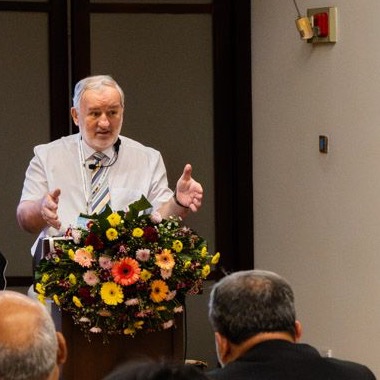
Presenting, Aerodromes Landscape in South Asia Workshop — Sri Lanka, November 2024
Enquire
SCOPING
Tell me what you're up against.
I read these myself; there is no team. You normally get a reply within two working days with
either a scope and a fixed price, or an honest note that I'm not the right person.
If it's a fit, the next step is a Zoom consultation on your needs and challenges — $250,
and the fee comes off any purchase of $300 or more. Your documents stay confidential, and
I'll send an NDA before you send me anything.
MODULE 0 · FREE
Start where the inspectors start.
Module 0 is the full introduction: how the curriculum is structured, what
certification is for, and how compliance decisions actually get made. It's free,
and it opens on the course platform as soon as you've told me where to find you.
The full introduction to aerodrome compliance and certification — how the curriculum is
structured, what certification is actually for, and how these decisions get made in
practice. No card, no call.